
Views: 0 Author: Site Editor Publish Time: 2026-08-23 Origin: Site


In an age when sustainability is no longer a buzzword but a business imperative, the humble drinking straw has undergone a radical transformation. Fast-food chains, coffee shops, and beverage brands are rapidly swapping petroleum-based plastic straws for biodegradable alternatives made of PLA (polylactic acid), paper, PHA (polyhydroxyalkanoates), and other plant-based composites. However, this material revolution demands a rethinking of packaging equipment. A machine designed for rigid plastic straws will struggle—or even fail—when faced with softer, more variable eco-straws. To ensure smooth production and high-quality output, you must carefully evaluate your next investment in PLA straw automation, paper straw packing, or PHA straw machine capabilities.
Biodegradable straws come in a broad spectrum of materials, each with unique mechanical and handling requirements. Before choosing a packing machine, you must understand how PLA, paper, PHA, and composite-fiber straws behave in an automated line.
Rigidity and Brittleness: PLA straws have a stiffness akin to traditional plastic. They hold their shape well, but excessive force can cause cracking, especially at low temperatures.
Moisture Sensitivity: While PLA is water-resistant in normal use, high humidity or condensation during processing can slightly soften the straws, affecting dimensional accuracy.
Surface Texture: Slightly tacky compared to PE or PP, PLA straws may cling to each other or to machine parts.
Softness and Flexibility: Paper straws are prone to bending, creasing, or crushing if guided over sharp edges or under excessive pressure.
Absorbency: Paper will wick moisture, so any condensation or coolant spray in the feed area can cause swelling or delamination.
Surface Friction: Higher friction means paper straws can jam or misalign in rigid feed channels.
Balanced Flexibility: PHA straws combine PLA’s rigidity with added flexibility, reducing breakage but requiring careful tension control to avoid buckling.
Temperature Tolerance: PHA can be processed over a wider temperature range but may deform if heat-seal bars run too hot.
Material Variability: PHA formulations vary by producer, so dimensional and mechanical tolerances can differ.
Irregular Surface and Diameter: Natural fibers lead to slight diameter inconsistencies and textured surfaces, demanding adaptive gripping.
Variable Wall Thickness: Depending on the blend ratio, wall thickness may fluctuate, affecting feed rate and counting accuracy.
Moisture Content: Natural fibers retain moisture differently—too dry, and they may splinter; too wet, and they may swell.
Why It Matters: If your packing machine’s feed rails, clamp force, sensor thresholds, or sealing parameters were designed solely for plastic straws, switching to a new material can cause jams, miscounts, broken straws, or poor seals. An ideal straw packing system accounts for these material traits with tailored design features.
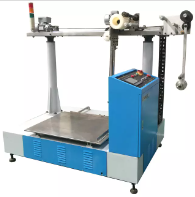
A versatile straw packing machine must physically adapt to different straw diameters, lengths, and flexibilities. Two critical subsystems handle this: the conveying (or feeding) mechanism and the clamping (or gripping) assembly.
Adjustable Side Guides: Rails on either side of the feed lane should move inward or outward to accommodate diameters from 4 mm (slender cocktail straws) up to 12 mm (thick smoothie straws). Look for motor-driven guide rails with digital position readouts rather than manual screw adjustments.
Gentle Belt Materials: For paper or composite straws, belt conveyors made of soft urethane or silicone with gentle ridges prevent crushing. A variable-speed belt motor lets you match feed speed to straw stiffness, reducing misfeeds.
Vibratory Hoppers: Multi-lane vibratory feeders oriented at shallow angles promote single-file straw alignment without excessive pressure—a must for delicate paper and PHA straws.
Servo-Controlled Pushers: Pneumatic pushers can be too abrupt, causing buckling. Servo-driven pushers offer fine-tuned acceleration and stroke length control, ensuring consistent, damage-free transfers.
Adaptive Grippers: Soft-pad gripper heads or vacuum-based pick-and-place nozzles handle irregular surfaces on composite straws, adjusting grip force in real time to avoid slip or deformation.
Quick-Release Tooling: When switching between straw sizes, mold-and-die style clamps that lock in place with no tools dramatically reduce changeover time compared to slide-in parts secured by screws.
Why It Matters: Machines with only fixed-width channels or one-size clamps will require manual retrofitting—or may not work at all—when you introduce a new straw format. Adjustable conveying and clamping ensure your line can process PLA, paper, PHA, and composite straws seamlessly, with minimal downtime.
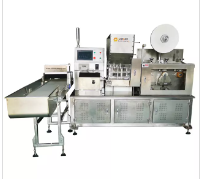
Quality control is essential for any consumable product. Missing or deformed straws in a pack can lead to customer complaints, returns, and reputational damage. Look for machines that integrate intelligent inspection and rejection mechanisms.
High-Resolution Cameras: Mounted above the feed lanes, cameras capture each straw as it approaches the counting station. Machine-vision algorithms detect bent straws, surface defects, or foreign particles.
Color and Shape Analysis: For colored or printed PLA straws, software inspects pattern alignment. For paper straws, the system checks for delamination or water stains.
Optical Sensors: Infrared or laser sensors count straws as they pass through a gate, offering accuracy within ±0.5% even at high speeds.
Weight-Based Systems: Miniature scales built into diverter gates verify that the correct number of straws has dropped into each pouch or box, catching any feed inconsistencies.
Fast-Acting Air Diversion: When a defective straw or miscount is detected, an air jet diverts that straw into a reject bin before it enters the package.
Gate-Based Sorting: For packages containing multiple straws, a gate holds the feed until a full, error-free count is confirmed, then releases the bundle to the sealing station.
Why It Matters: Manual inspection is slow and unreliable. Without automated rejection, one bad straw can ruin an entire pack or box. Smart detection systems ensure only perfect bundles are sealed, maintaining brand quality and eliminating costly recalls.
To bridge the gap between diverse straw formats and streamlined operation, Hangzhou Fuyang Sunrise Machinery Co., Ltd. has developed a highly modular architecture coupled with a digital recipe management system.
Feed Module Cartridges: Snap-in cartridges for vibratory feeders, conveyor lanes, or multi-lane hoppers let you switch from a 2-lane PLA setup to a 4-lane paper arrangement in under 10 minutes.
Tool-Less Change Parts: Sealing jaws, cutting blades, and clamp blocks mount on standardized brackets with quick-release latches—no wrenches required.
Expandable I/O Bays: Add new sensors or actuators—for example, a specialized humidity probe for PHA straws—via open slots in the machine’s control panel.
HMI-Stored Profiles: Operators select straw type (PLA, paper, PHA, composite), diameter, length, and desired count per pack on a touchscreen interface. The machine then auto-adjusts guide-rail positions, conveyor speeds, seal-bar temperature, and sensor thresholds.
Quick Setup Wizards: Built-in tutorials guide novices through each changeover step, confirming tool placements and parameter settings to eliminate setup errors.
Recipe Versioning: Maintain multiple profiles for minor variants—such as 200 mm vs. 250 mm PLA—without overwriting previous settings. Recipes can be backed up externally or shared across multiple machines.
Why It Matters: This modular, recipe-driven approach slashes changeover times, reduces human error, and ensures consistent performance across shifts. Rather than keeping multiple dedicated lines for each straw type, you can use one flexible machine that morphs to your needs.
Sustainability trends evolve rapidly. A straw material that’s next-gen today—such as paper-PLA hybrids or new bio-composites—might be mainstream next year. Your investment is safer if your packing machine can adapt to emerging formats with minimal hardware changes.
Spare I/O Channels: Control panels with extra inputs and outputs let you add future sensors, actuators, or vision modules without rewiring.
Software Upgradability: Firmware that supports field upgrades over Ethernet keeps your machine current with the latest inspection algorithms and material-handling routines.
Lane Expansion Kits: Add up to two extra feed lanes to double capacity on peak seasons.
Modular Downstream Interfaces: Integrate with new case packers, tray loaders, or robotic palletizers as order sizes grow.
Remote Diagnostics: Sunrise Machinery’s engineers can log in securely to troubleshoot errors, update recipes, or optimize performance across time zones.
Training and Certification: Ongoing operator and maintenance training ensures your staff can leverage new features as they’re released.
Why It Matters: Buying a fixed-function machine risks obsolescence the moment a new straw material emerges. Future-proof flexibility protects your capital investment and lets you respond quickly to market opportunities without a second major CAPEX cycle.
Choosing the right straw packing machine is no longer a straightforward decision. With a proliferation of PLA, paper, PHA, and composite straws on the market, you need equipment that understands the nuanced demands of each material. The five factors covered here—material characteristics, adjustable conveying and clamping, smart inspection and rejection, modular plugins with recipe control, and future-proof flexibility—form the bedrock of any robust investment decision.
By prioritizing PLA straw automation, paper straw packing, and PHA straw machine compatibility, you safeguard your production line from costly changeovers, jam-related downtime, and quality lapses. Furthermore, a modular, recipe-driven system from a trusted partner like Hangzhou Fuyang Sunrise Machinery lets you scale throughput, integrate new materials, and refine processes without replacing the entire line.
Investing in a versatile, intelligent straw packing machine does more than expedite packaging—it empowers your business to stay ahead of sustainability trends, optimize labor and material costs, and deliver impeccable quality that resonates with eco-conscious consumers. With the right equipment under your belt, you can confidently navigate the evolving landscape of biodegradable straws and secure a competitive edge in a greener future.


