
Views: 0 Author: Site Editor Publish Time: 2026-10-13 Origin: Site


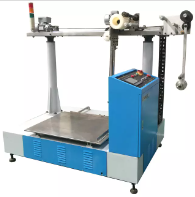
Depending on the kind of operational environment, the kind of requirements to be met differs, thus varying the procedure of purchasing a paper straw packing machine based on whether you have a large-scale supermarket, an active restaurant, or a large food-service chain. In this article, we will examine how to buy a paper straw packing machine.
By the end of this guide, you will be able to narrow down your choices efficiently, avoid over-investing in unnecessary features, and select a packaging solution that matches your business scale and customer volume.
Plastic forgives a lot. Paper doesn't. Here's what changes on the packing line.
Moisture sensitivity: Paper absorbs moisture from the surrounding atmosphere and from any wet surface it may come into contact with. Your only protection is packaging.
Physical fragility: The paper straw could easily get crushed or scuffed in a feeder where the same could not happen to the plastic straw.
Hygiene expectations: Straws are treated as food products by food service consumers. Wrapping each straw individually is often required.
Brand presentation: For a chain, the wrapping is the billboard. Printing of brand logos, batch codes, and expiration dates is requested.
Put simply, a machine that works fine for a plastic straw line may cause trouble with paper. Keep that in mind as you compare options.
Before you look at a single machine, decide which format your customers actually buy. Most paper straw packing falls into three groups.
Each straw gets its own wrapper. It's the cleanest option, and it's what hotels, takeaway chains, and hygiene-conscious restaurants ask for.
The Full Automatic Individual Straw Packing Machine LG-58YS is Sunrise's servo-controlled model, and it comes with a printer. According to the product page, it handles straws from 4 to 12 mm in outer diameter and 150 to 300 mm in length, and the machine is made of stainless steel.
Straws are counted and sealed together in a bag. It's fast, it's economical, and it suits cafés, canteens, and wholesale supply.
The Full Automatic Bulk (Group) Straw Packing Machine LG-52EB covers 50 to 500 pieces per bag, with straw lengths of 150 to 240 mm. Sunrise developed it in 2019 around the needs of UK customers, and the design sorts and segments the straws so the finished bag looks tidy.
Here the straws go into paper boxes. Supermarkets and distributors like this format because it stacks well, looks good on a shelf, and fits the push away from plastic packaging.
The Bulk (Group) Straw Paper Box Packing Machine LG-56S fills boxes with 50 to 300 straws, for lengths of 150 to 220 mm. One detail is worth knowing. For wrapped straws, it works alongside an individual straw packing machine, so you'd run the two together.
Retail buyers pay attention to the aesthetics and performance of the pack in the store. Consistent counts, clean seal, and shape retention in the store are what they are looking for from the packaging. Both paper boxes and tidy bags fit this criterion.
Where your retail customers deal in premium and hygiene-oriented products, individual packs of straws packed in a box will get you the spot on the shelf. This is the packaging option where the LG-56S and individual packer go hand-in-hand.
Independent restaurants and cafés focus mostly on price and convenience. They will buy your product in bulk packages of several hundred straws without a need for an individual wrapper. A bulk packer with accurate counts and fast size change works for them.
The chains are the hard ones. They want the same pack, every time, at hundreds of locations. Many demand individually wrapped straws, branded with the logo on the packaging. Some also have date or code requirements on the wrapper.
That's where the machine that offers precise wrapping and a built-in printer makes its money back. This is precisely what the LG-58YS does by providing both the servo-controlled packaging and the printer in one machine.
Diverse customers? There are plenty of machinery manufacturers who cater to all three types of customers. In this case, you definitely shouldn't try to have one machine do everything. The usual solution here is to use one individual wrapper and one bulk/box wrapper.
Here's the part that separates a good purchase from an expensive headache. Run every machine you're considering through these checks.
Straw size range: Verify the maximum and minimum dimensions of the straw to be produced against the list of your products. All three machines produce diameters from 4 to 12 mm, but they have different length ranges, starting from 150 to 300 mm on LG-58YS to 150 to 220 mm on LG-56S. For manufacturers producing straws of considerable length, one test can eliminate this machine.
Real-world output: Rated production rate and actual rate differ. Ask for a machine demonstration using your straws, and make sure the packing rate will be sufficient for your straw manufacturing facility.
Gentle feeding: Careful handling must be considered as soon as the paper straws begin to pass through the machine. A system of an automatic straw feed conveyor could connect your production line with the packer without handling the straws manually.
Counting accuracy: In bulk or box packaging format, incorrect counting results in insufficient quantity in the package and dissatisfied buyers. Inquire about the counting technology of the machine and what happens if a mistake occurs.
Control system: Servo motor control of an individual wrapper helps to maintain a consistent wrapping process and reduce the loss of wrapper film. Inquire about the adjustment of parameters by the operator and his/her training.
Printing and coding: If your buyers require any logos, dates, and batches on your wrappers, make sure it is included in the machine and not added in the future.
Materials and build: Food-contact surfaces should be easy to clean. The LG-58YS, for example, is listed as stainless steel. Also ask which wrapping materials the machine runs, so you're sure they suit paper straws.
Changeover and flexibility: How long does it take to switch between sizes or pack counts? If you run short orders for many customers, slow changeovers eat your margin.
The cheapest machine on a quote sheet is rarely the cheapest machine to own. Total cost shows up over months, not on day one.
Material waste: Uncontrolled film or paper wrapping eats away at film or paper. Even if it wastes a little material per pack, you'll see how fast it gets on a volume scale.
Labor: An automatic box packer such as the LG-56S still saves some time, although you need to schedule your labor in accordance with it.
Spare parts: Wearing parts will need replacing eventually. Check that the supplier stocks them so you won’t be left stranded.
Warranty and support: Sunrise lists a one-year warranty, English manuals, and video call guidance. Compare the warranty and support against any other supplier you're considering.
Downtime: A stopped line costs money every hour. Ask how fast the supplier answers when something goes wrong.
A simple way to judge payback: divide the machine price by your expected monthly savings from lower labor and less waste. Use your own numbers, and be honest about them.
Copy these into your next email. A good supplier won't flinch at any of them.
Running proof: Can you send me the running video with the use of paper straws of my size?
Test and acceptance: Can I observe a testing or acceptance run prior to shipment?
Wrapping and sealing: What wrapping materials can be recommended for paper straws? Why?
Spare parts: Which spare parts should I have, and how quickly do you deliver them?
Training and manuals: What does the machine include for proper setup and training?
Line fit: How does this fit into my production line of straws or existing box packer?
A demo video is a sales tool. A proper test is evidence. If you can't visit the factory, here’s a simple way you can still run a test.
Send your own sample straws: Use your actual size, wall thickness, and surface finish. A perfect-looking demo with someone else's straws proves very little.
Define what "good" means: Agree in advance on the count accuracy, the seal quality, and the reject rate you'll accept. Write it down.
Ask for the full run: You want to see feeding, counting, wrapping or filling, and sealing in one unbroken take, not edited clips.
Check the output closely: Ask for photos of the finished packs, including close-ups of the seals and any printing. Then ask for a few sample packs, if the supplier can ship them.
Watch the awkward moments: How does the machine behave during a jam, a size change, or a reel change? That's where cheap machines show their weakness.
Buying on speed alone: A very fast machine that squashes or counts straws incorrectly is slower than a steady one.
Ignoring paper's quirks: A machine tuned for plastic is not necessarily suitable for paper. Check with your own straws.
Skipping the test run: Seeing is believing. Ask for video of your size, your material, your packaging.
Forgetting the next customer: You may order bags now. But you may order printed single straws next year. Make sure that the machine or the supplier will grow along with you.
The machines are only half of your purchase. The other half is the company that provides them. Hangzhou Fuyang Sunrise Machinery is the export wing of its own factory. It means that you will deal directly with the people who manufacture these machines, with no middlemen. You will also receive prompt responses, shipping in proper packaging and loading, as well as a one-year warranty on the product.
On our service page, we also have English manuals, video call assistance, engineers who will come to install and train you, as well as free replacement parts in the warranty year. That's the kind of detail worth confirming in writing before you order.
Ready to talk specifics? Browse the full straw packing machine range, then contact us with your straw size, material, and target pack format. We can point you to the right model.
The difference between Individual and bulk straw packing machines is based on the wrapping capacity, the form of the packaging, and the application of the packaging. The Individual Straw Packing Machine wraps up each straw individually with a single piece of material made of either paper or BOPP Film. Bulk Straw Packing Machines, on the other hand, wrap several straws (in the range from 10 to 500) in one packet, pouch, or box.
The typical speed of a standard paper straw packing machine is 300 to 700 pieces per minute. However, the higher-speed models (which are commonly found in high-volume production lines with servo drives or multi-lane systems) have speeds ranging from 600 to 1,000+.
If you are looking for a paper straw packing machine, check whether the machine has been awarded the CE mark so as to meet Europe's health and safety standards; in addition, if you are operating in North America, then consider choosing machines that have been certified by UL or CSA for electrical safety. It is equally vital to make sure that the supplier has obtained ISO 9001 quality management certification in order to prove reliable design and assembly standards.
