
Views: 0 Author: Site Editor Publish Time: 2026-05-18 Origin: Site


An industrial manufacturing unit transforms simple extruded tubes into functional, bendable products. We call this highly specialized equipment a straw bending machine. It automates the delicate process of pressing precise corrugations into straight straws and compressing them to create an accordion-style flexible joint. Transitioning from basic straight straw extrusion to flexible straw production unlocks highly profitable specialized markets. Manufacturers can quickly enter healthcare accessibility sectors, supply tetra-pack juice producers, and dominate novelty drink categories. However, this strategic shift demands flawless mechanical integration. Choosing the wrong machinery leads to cyclical defects and ruined batches. We will provide buyers with a practical, evidence-based framework to evaluate crucial machine specifications. You will learn to navigate complex production limitations and confidently select the precise equipment required for your operational setup.
Material dictates the machine: Plastic (PP) and PLA can often run on the same flexible straw bending machine, but paper straws require dedicated, specialized equipment to prevent structural tearing.
Strict dimensional limits: Most commercial machines are locked to a single straw diameter (e.g., 3.8mm or 6mm); changing diameters requires entirely different machinery.
Speed vs. Complexity: While entry-level machines run at 250 pcs/min, high-speed units (700+ pcs/min) require superior drive components (cam-driven systems, linear motion guides) to maintain consistency.
Maintenance is a primary hidden cost: The multi-clamp rotary system means a single loose screw out of 12 or 18 clamp groups will cause cyclical, batch-ruining defects.
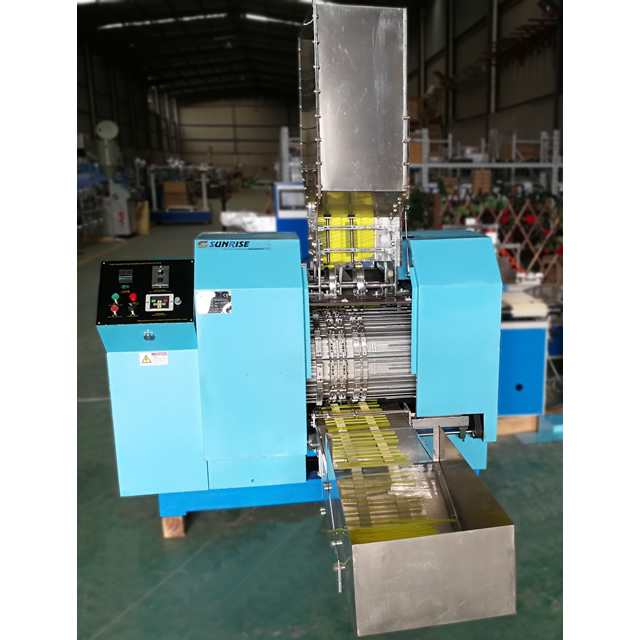
Buyers must demystify the internal process before making a purchase. You need to understand exactly what your technicians will maintain. Every automatic straw bending machine relies on a synchronized sequence of mechanical actions. If one step falls out of alignment, the entire batch fails.
The process begins at the feeding system. Operators load straight straws into an adjustable acrylic or stainless steel hopper. Gravity pulls the straws downward. Specialized brushes or swinging flaps gently separate them. This ensures single-unit feeding and prevents frustrating material jams.
Next, the main drum takes over. The system captures individual straws using mechanical clamps. Most industrial units feature 12 to 18 sets of these mechanical hands. They mount directly onto a continuously rotating drum. This continuous rotary motion enables high-speed mass production.
The actual corrugation happens during the die-pressing phase. As the drum rotates, the machine introduces forming wheels and internal pins. These components compress the straw wall. They create precise grooves along the plastic or paper surface.
Finally, the compression and output stage forms the joint. The mechanical hands physically push the grooved section inward. This action shrinks the grooves. It creates the final flexible accordion joint. The system then automatically ejects and counts the finished batch.
Gravity Feeding: Straight straws drop uniformly from the main hopper.
Clamp Capture: Mechanical hands secure the straw on the rotating drum.
Die-Pressing: Internal pins and external wheels press parallel grooves.
Compression: Mechanical clamps push inward to collapse the grooves.
Ejection: The machine ejects and counts the completed flexible straw.
Evaluating supplier spec sheets requires a structured approach. You must translate raw features into production outcomes. Let us examine the core dimensions buyers must scrutinize.
Production speed dictates your mechanical requirements. Entry-level units typically operate between 200 and 350 pieces per minute. They often use basic pneumatic cylinders. High-speed models push beyond 600 to 1000 pieces per minute. Pneumatic systems simply cannot maintain precision at these maximum RPMs. You must look for cam-driven corrugation systems. You should also verify the presence of linear motion guides. These superior drive components guarantee stability during high-speed continuous runs.
Evaluate your target market carefully. Do your clients require PP, PLA, or paper straws? You cannot pivot a flexible straw bending machine from plastic to paper midway through its lifecycle. Paper straws require entirely different tension controls and moisture handling. If you feed paper into a standard PP machine, you will experience catastrophic structural tearing.
Modern manufacturing demands strict automation. You should mandate variable frequency drives in your procurement specs. Reputable brands like Delta provide excellent stepless speed adjustments. Operators can finely tune the production rate to match material behavior. Furthermore, mandate pre-set batch counting alarms. The system must feature automatic stop mechanisms. If a paper or plastic jam occurs, the machine must halt immediately. This feature dramatically minimizes material waste and prevents tool damage.
Machine Tier | Throughput (pcs/min) | Primary Drive System | Ideal Material Match | Automation Level |
|---|---|---|---|---|
Entry-Level | 200 – 350 | Pneumatic Cylinders | Standard PP, Thick PLA | Basic Batch Counting |
Mid-Range | 400 – 600 | Hybrid Cam & Pneumatic | PP, PLA, Specialized Paper | VFD Speed Control, Auto-Stop |
High-Speed | 700 – 1000+ | Full Cam-Driven, Linear Guides | Standard PP (High Volume) | Full PLC Integration, Jam Alarms |
You must categorize solutions based on terminal market requirements. Buyers generally choose between two distinct machinery classifications. Each serves a very different commercial purpose.
This category handles the bulk of global production. The machine creates a standard 10 to 11 teeth corrugation. Engineers optimize these units for high-speed, continuous runs. They perfectly suit standard beverage packaging needs. For example, U-shape attached straws for milk cartons rely entirely on this technology. Hospitals and healthcare facilities also consume massive volumes of these standard 11-teeth variants. The margins remain narrow, but the volumes stay incredibly high.
The novelty sector demands a different mechanical approach. Artistic bending machinery creates extended corrugation sections. A typical artistic straw might feature up to 58 teeth on a 270mm to 340mm tube. Children and party-goers love stretching and twisting these long accordion sections.
Manufacturing artistic straws requires specialized hardware. The machine needs a significantly longer mechanical stroke. It relies on highly customized molds to press 58 individual grooves without tearing the plastic. Throughput runs much slower compared to standard machines. However, artistic straws command substantially higher retail margins in novelty and creative market segments.
Comparison Chart: Standard vs. Artistic Production
Feature Matrix | Standard Machinery | Artistic Machinery |
|---|---|---|
Corrugation Teeth | 10 – 11 teeth | Up to 58 teeth |
Straw Length Capacity | Shorter (e.g., 150mm) | Longer (e.g., 270mm – 340mm) |
Mechanical Stroke | Short, rapid cycle | Long, extended pull |
Throughput Rate | Very High (up to 1000 pcs/min) | Slower (Specialized runs) |
Target Market | Tetra-packs, Healthcare, Fast Food | Parties, Novelty Drinks, Retail Packs |
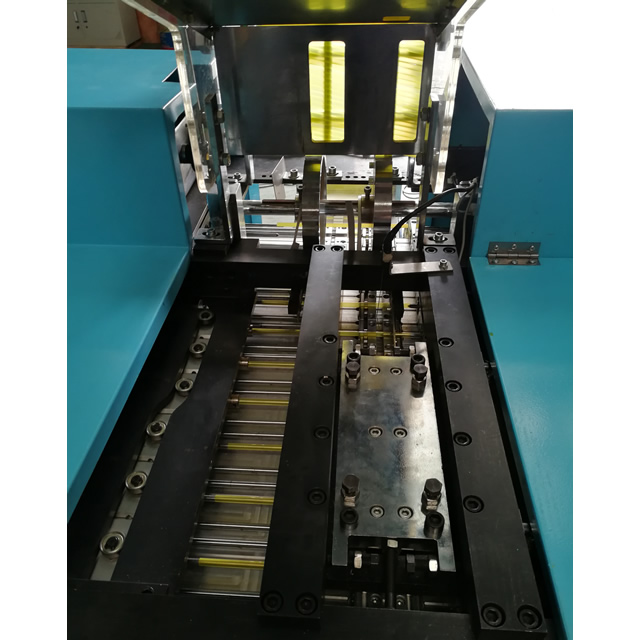
Factory floors present harsh realities. Even the best equipment faces operational hurdles. We must highlight what goes wrong and show you how to mitigate it.
Machines utilize multiple linked molding structures. You typically see 12 to 18 sets of clamps rotating continuously. This creates a severe vulnerability. Micro-damage in just one clamp causes massive headaches. A single loose screw in one mechanical hand results in one defective straw every single rotation. At 600 RPM, you generate 600 defective straws mixed into your good batch every minute. Operators must remain highly vigilant to catch these cyclical errors early.
Buyers often falsely assume a machine easily adjusts to any straw size. This assumption destroys budgets. You can sometimes modify the cutting length slightly. However, the machine remains hard-tooled for a specific inner diameter. A 5.6mm standard drinking straw requires different molds than a 3.8mm tetra-pack straw. You cannot swap diameters on a whim. Clarify your exact dimensional needs before you place an order.
Do not underestimate the initial setup phase. The interplay between forming pins and external wheels requires highly skilled mechanical calibration. A fraction of a millimeter off, and the straw tears or fails to bend. You cannot simply plug the machine in and walk away.
How to Mitigate Production Risks:
Daily Calibration Checks: Inspect all 12-18 clamp groups before starting the morning shift.
Dedicated Mechanics: Employ in-house mechanical engineers who understand rotary die-pressing.
Lock Down Specs: Finalize your exact 3.8mm or 6.0mm diameter requirements before ordering.
Limit Adjustments: Do not let untrained operators tweak VFD speeds or forming pin depths.
Separating reliable manufacturers from low-tier assemblers requires strict due diligence. Low-tier factories cut corners on unseen internal components. You must demand transparency.
Component Transparency: Insist on knowing the exact brand of vital moving parts. Demand reputable bearings like NTN or NSK. Require proven inverter brands for electrical control. Cheap bearings fail quickly under high-speed rotary stress.
Turn-Key Integration: Assess the broader capabilities of the supplier. Can they provide seamless downstream integration? Ask if they manufacture automatic U-shape bending tools and inline packaging systems. You want one supplier responsible for the entire line.
Verification Protocols: Never wire the final payment blindly. Demand live, pre-shipment online video commissioning. Force the supplier to run the machine using your specific material thickness. If your PLA measures 0.15mm, they must test with 0.15mm PLA. Watch them run a continuous 30-minute batch on camera.
This checklist strips away marketing fluff. It forces suppliers to prove their mechanical competence before you accept the shipment.
Common Mistake: Buyers often accept a video of the machine running empty. You must insist they run actual raw material through the hopper during the verification phase. Empty running hides clamp misalignment.
Purchasing a straw bending machine requires strict alignment between your business goals and mechanical realities. It goes far beyond simply acquiring standalone hardware. You must match the machine's mechanical precision to your specific material tolerances, whether you run PLA, PP, or paper.
Focus heavily on supplier transparency and component quality. Ensure you lock in your exact inner diameter before requesting quotes. Build your strategy around continuous maintenance, understanding that cyclical defects represent your biggest operational threat.
Take action today by mapping out your exact product dimensions. Finalize your material choices and batch packaging requirements. Once you secure these details, you can confidently solicit RFQs from top-tier equipment manufacturers and build a highly profitable production line.
A: No. While some machines can seamlessly handle both PP plastic and PLA (biodegradable plastic), paper straws require entirely different molding tensions. Paper demands dedicated machinery to prevent tearing during the corrugation process.
A: Generally, no. Bending machines are explicitly engineered around a fixed diameter. You might buy one machine for 3.8mm and another for 6mm. Adapting a machine for a new diameter is cost-prohibitive compared to buying a dedicated unit.
A: Most commercial bending machines are highly energy-efficient. They typically operate on a standard 3-phase 380V or 220V setup. They generally draw only 1.5kW to 3kW per hour, depending entirely on their speed capacities.
A: The industry standard sits at 12 to 14 months from the date of shipment. This warranty specifically covers core electrical components like inverters and motors. It strictly excludes standard wear-and-tear items like forming pins and plastic clamps.


