
Views: 0 Author: Site Editor Publish Time: 2026-05-11 Origin: Site


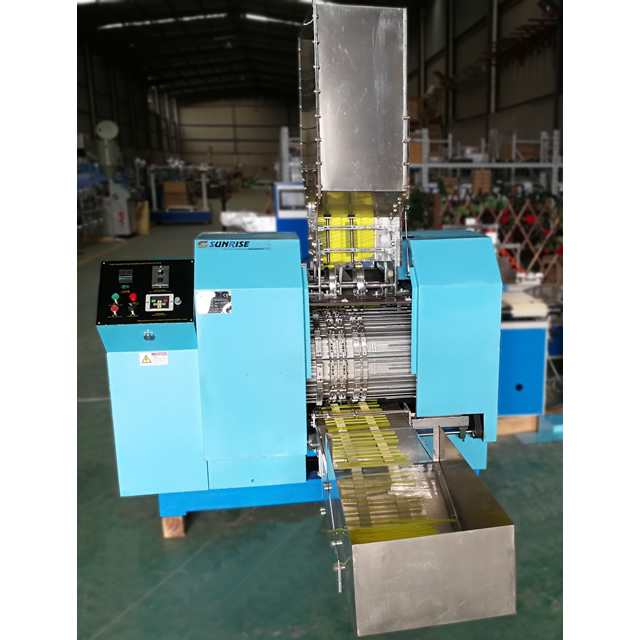
Shifting market demands require manufacturers to upgrade from straight straw extrusion to flexible straw production. However, selecting the wrong bending equipment leads to high defect rates, frequent material jamming, and costly downtime. Consumers today expect ergonomic and versatile drinking solutions. Manufacturers must adapt production lines swiftly to meet these rising expectations. A reliable investment must balance high-speed output with precision forming, cross-material compatibility, and manageable maintenance requirements. If you choose inferior machinery, you risk bottlenecking downstream packaging operations.
This guide breaks down the critical mechanical features, automation controls, and risk-mitigation factors procurement teams must evaluate when shortlisting bending equipment. You will learn how to properly assess substrate handling, analyze rotary die precision, and right-size your facility's capacity tiers. We also explore automation benefits and highlight daily maintenance realities to guarantee smooth, continuous operations.
Capacity vs. Consistency: High top-end speeds (up to 700 pcs/min) are only profitable if supported by stable 12-axis rotary forming systems and fault-stop automation.
Material Flexibility: Modern machines must handle varying tensile strengths, seamlessly switching between traditional PP, biodegradable PLA, and paper substrates.
Maintenance Realities: Look for features like forward/reverse jogging switches and accessible die blocks; commissioning and calibrating the mechanical hands is the primary operational bottleneck.
Labor Efficiency: A properly automated flexible straw bending machine allows a single operator to manage multiple units simultaneously.

Global environmental regulations urge manufacturers to transition from traditional plastics to PLA or paper. You lose market adaptability if your production relies on single-substrate equipment. Modern production floors demand versatility. An advanced flexible straw bending machine solves this problem by managing varied materials effortlessly.
First, evaluate the adjustable compression tolerances. The equipment must accommodate varying tube wall thicknesses perfectly. Most standard drinking straws range between 0.10mm and 0.18mm in thickness. Brittle materials, especially biodegradable PLA, easily develop micro-fractures under intense pressure. Operators need machines capable of fine-tuning these pressure settings precisely. This capability prevents splitting during the vital corrugation phase.
Next, examine the feeding system adaptability. You want transparent acrylic and stainless steel hoppers installed on the unit. These high-grade materials prevent static electricity buildup while offering visual monitoring. The hopper must also feature adjustable lengths. Operators frequently switch between standard 190mm to 250mm straight straws based on client orders. Proper hopper sizing prevents annoying feed jams across varying material weights.
Finally, prioritize substrate-specific forming mechanics. A dependable machine provides interchangeable forming needles. You should also swap pressure wheels based on the specific rigidity of the material being processed. Paper behaves fundamentally differently than extruded plastic under mechanical compression. You must adjust pressure tolerances and recalibrate feeding modules when transitioning substrates. This adaptability ensures high-quality yields regardless of the raw material.
Uneven corrugation creates flexible straws that leak or bend awkwardly. They might also fail to hold their shape during use. The quality of this precise "bend" dictates your product's market viability completely.
Industry-standard equipment utilizes a sophisticated multi-station rotary drum design. These systems operate using a continuous rotation method. They typically process 12 straws simultaneously through the main forming drum. This simultaneous processing guarantees high output volume. However, it requires intense mechanical precision to maintain quality control.
You must evaluate the mechanical hand precision meticulously. A high-quality straw bending machine grips, rotates, and compresses the straw seamlessly. This complex action forms the standard 8-11mm flexible section. Forming this section usually requires 10 to 11 precision teeth pressing into the tube. The clamping mechanisms dictate the final aesthetic and functional quality of the bend.
Tooling durability represents another critical evaluation factor. Inspect the material grade of the forming pins and die sets carefully. Minor wear on a single clip among the 12 sets compromises your entire production yield. When operators ignore tooling maintenance, scrap rates multiply rapidly.
Avoid these common mistakes regarding precision mechanics:
Ignoring minor clip wear: Allowing one worn plastic clip to remain in the 12-axis system ruins every twelfth straw produced.
Using incorrect forming needles: Failing to match the needle diameter to the internal tube diameter causes wall tearing.
Over-pressurizing the rotary dies: Applying excessive compression force to achieve a deeper bend often snaps brittle PLA materials.
Skipping lubrication schedules: Dry metal-on-metal contact degrades the precision teeth quickly, resulting in shallow, stiff corrugations.
Over-specifying machine speed often leads to mechanical instability and excessive wear. Conversely, under-specifying simply bottlenecks your downstream packaging lines. Finding the right balance ensures continuous, stable output across the entire facility.
Manufacturers offer tiered speed options to match your floor capacity. You should align the machine output closely with your specific packaging workflows. Entry-level models process 200–250 pcs/min efficiently. Mid-range units hit 350 pcs/min reliably. High-volume automatic straw bending machine models can reach up to 700 pcs/min. Do not chase top speed if your bagging equipment cannot keep pace.
Capacity Tier | Output (pcs/min) | Best Use Case | Downstream Packaging Impact |
|---|---|---|---|
Entry-Level | 200 – 250 | Small-batch, specialty materials (e.g., artistic shapes). | Feeds directly into manual or semi-auto single wrappers. |
Mid-Range | Approx. 350 | Standard food service contracts, steady PLA production. | Pairs perfectly with standard multi-pack baggers. |
High-Volume | Up to 700 | Large-scale commodity plastic or mass retail runs. | Requires high-speed automated bulk counting and wrapping. |
Variable Frequency Drives (VFD) provide necessary drive stability. Look for recognized inverter brands, such as Delta, which allow step-less speed regulation. Step-less regulation ensures smooth acceleration and deceleration curves. This functionality greatly reduces mechanical stress on the rotary drums during start-up phases.
Lastly, assess the motor and transmission quality thoroughly. The driven system requires high-grade motors featuring a reliable braking function. Emergency stops happen frequently during material jams. A strong braking mechanism prevents over-travel instantly. This fast stop protects the mechanical hands from crashing and suffering severe damage.

High labor costs erode profit margins in low-cost commodity manufacturing. Human error during manual batch counting further disrupts downstream processes. Automation resolves these daily inefficiencies while improving your bottom line.
Evaluate the operator-to-machine ratio carefully before purchasing. Advanced control panels and stable feeding mechanisms change the labor dynamic completely. A single technician should easily operate at least two machines concurrently. This consolidation drastically lowers your daily labor requirements while maintaining high output.
Automated fault detection prevents catastrophic machine damage. The equipment must feature sensitive auto-stop sensors. These sensors detect material jams or empty hoppers instantly. They shut off the drive motor before the rotary dies crash into improperly seated straws. This protection saves thousands in replacement parts over the machine's lifespan.
Integrated batch control facilitates seamless downstream operations. Built-in automatic counting features eliminate human estimation entirely. Preset alarm functions notify operators precisely when a batch completes.
Follow these integration steps for maximum labor efficiency:
Sync the counting sequence: Program the bending machine to match the exact grouping requirements of your multi-pack bagging equipment.
Calibrate the fault alarms: Ensure auditory and visual alerts trigger instantly upon detecting an empty feed hopper.
Stage raw materials strategically: Position straight straw bins within arm's reach so one operator can reload two hoppers without walking away.
Schedule synchronized maintenance: Pause paired machines simultaneously for cleaning, keeping the technician focused on a single zone.
The highest hidden expense of bending equipment is commissioning downtime. Technicians often spend hours on initial calibration. Routine maintenance of the forming clamps also consumes valuable production time. You must source equipment designed for easy servicing.
Forward/reverse jogging switches are absolute game-changers for maintenance teams. This feature allows safe, incremental testing during setup. Technicians can move the rotary drum fractionally to observe the clamping action closely. Proper jogging functionality reduces routine maintenance and jam-clearing time by up to 66%.
Modular component access simplifies daily servicing tasks. The machine utilizes 12 sets of delicate forming structures. These structures rely heavily on precise plastic and metal clips. Any broken clamp or loose screw halts production entirely. Look for open-architecture designs. Open designs allow technicians quick, unobstructed access to individual die sets without dismantling the entire drum.
Supplier engineering support heavily influences your early success rate. Evaluate the manufacturer's service level agreement (SLA) for commissioning. Fine-tuning the mechanical hands requires experienced engineers. The intricate 12-axis system demands strict tolerances to function flawlessly. Ensure your supplier provides robust technical training. On-site deployment guarantees your maintenance team learns proper calibration techniques immediately. This foundational knowledge prevents extended downtime during future production runs.
Sourcing the right bending equipment requires looking past theoretical top speeds. True operational efficiency lies in the quality of the rotary dies. It also depends on the adaptability of the variable frequency drive. Finally, evaluate how easily your maintenance team can service the intricate 12-axis clamping system. A well-maintained machine outproduces a neglected, high-speed model every time.
Before requesting quotes, finalize your target material definitively. Decide whether you will process PP, biodegradable PLA, or paper. Next, document your required wall thickness, keeping within the 0.10-0.18mm standard. Finally, map out your required output per shift. This calculation helps you match the appropriate speed tier to your downstream packaging lines. Taking these proactive steps ensures a highly integrated, reliable production floor.
A: Generally, no. Regular bending machines and artistic (complex multi-bend) machines use different forming mechanics and die sets. You must specify the end-product shape during procurement to ensure you receive the correct tooling configuration.
A: Tubes thinner than 0.10mm are prone to tearing during the die-pressing stage. Tubes thicker than 0.18mm may not compress properly, causing excessive wear on the mechanical clips and resulting in a stiff, non-functional bend.
A: Yes. Because paper behaves fundamentally differently under compression than extruded plastic or PLA, transitioning substrates often requires swapping out forming needles, adjusting pressure tolerances, and recalibrating the feeding hoppers.
A: The industry standard for the flexible (corrugated) section is between 8mm and 11mm. This flexible segment typically consists of 10 or 11 cleanly pressed rings to ensure a smooth bending action.


