
Views: 0 Author: Site Editor Publish Time: 2026-06-22 Origin: Site


Packaging bottlenecks often emerge when biodegradable materials like PLA enter high-speed straw production lines, where consistency, hygiene, and throughput must stay tightly controlled. A PLA straw packing machine helps bridge this gap by automating wrapping, counting, and bundling while maintaining stable output across different straw formats.
Unlike general packaging systems, straw equipment must balance delicate material handling with food-grade cleanliness and compatibility across PLA, paper, and U-shaped straws used in beverage carton applications. Understanding how these systems operate helps manufacturers evaluate real production needs rather than relying on surface-level machine categories or naming conventions.
PLA straws appear structurally similar to conventional plastic straws, yet their physical properties and sustainability requirements introduce subtle but important engineering constraints. These constraints become more visible at high-speed industrial packaging levels, where minor instability can affect sealing quality, output consistency, and product durability.
PLA materials are more rigid and less elastic than PP-based alternatives, which increases sensitivity during rapid mechanical handling. During high-speed feeding and alignment, even small variations in pressure or timing can lead to edge cracking, bending stress, or uneven positioning. These issues do not always appear immediately but can accumulate across large production batches, affecting downstream usability. To maintain stability, modern systems rely on servo-controlled feeding structures and synchronized motion paths. This ensures that straws move through the hopper and transfer points with controlled force distribution, reducing mechanical stress while maintaining consistent orientation throughout the packaging cycle.
Biodegradable straws are widely used in foodservice, beverage retail, and takeaway environments where hygiene standards are strictly enforced. Packaging systems must therefore minimize manual contact and ensure that each unit is fully sealed before leaving the production line. Automated wrapping and sealing processes reduce contamination risk by keeping the entire operation enclosed. This also improves consistency across batches, especially in high-volume production environments. In many industrial setups, sealing, cutting, and discharge occur in a continuous cycle, limiting exposure to external elements. As a result, hygiene compliance becomes an inherent function of machine design rather than an external quality control step.
PLA straws interact differently with packaging materials compared to conventional plastics. Their surface characteristics and thermal sensitivity require precise control of sealing temperature, pressure, and dwell time. If these parameters are not properly balanced, packaging may loosen during transport or suffer deformation under heat exposure. Paper and film materials also behave differently depending on humidity and coating type, adding another layer of variability. Operators often need to fine-tune system settings when switching between packaging formats or straw diameters. Stable performance depends on achieving consistent bonding without damaging the straw surface or compromising compostable packaging requirements.
PLA straw packaging systems are generally structured around two main configurations: individual wrapping systems and bulk grouping systems. Each serves a different stage of the supply chain, and many modern production facilities combine both to achieve flexibility across retail, wholesale, and export channels.
Individual wrapping machines focus on sealing each straw separately in paper or film packaging. A system such as a full automatic individual straw packing machine integrates feeding, wrapping, sealing, cutting, and counting into one continuous process. This configuration is commonly used where hygiene standards and visual presentation are equally important. The synchronized motion system ensures stable output even during long production cycles, while PLC-based controls allow operators to adjust straw length, packaging speed, and sealing parameters with minimal downtime. In branding applications, inline printing systems can be incorporated to support logos, batch codes, or product information. The result is a consistent, clean, and standardized output that supports retail distribution and foodservice requirements without additional manual handling or post-processing steps.
Feature | Individual Wrapping System | Group Packing System |
Output format | Single straw per pack | Multiple straws per bag |
Machine focus | LG-58YS-type systems | LG-52L-type systems |
Main purpose | Hygiene & branding | Distribution efficiency |
Production stage | Primary packaging | Secondary packaging |
Typical usage | Foodservice, retail | Export, wholesale |
Group packing machines focus on bundling pre-wrapped straws into fixed quantities for logistics and wholesale distribution. Instead of handling single-unit sealing, the system counts, groups, and packs straws into sealed bags based on predefined batch sizes. This approach improves efficiency in warehouse handling and simplifies export preparation. It is particularly useful for large-scale suppliers serving supermarkets, distributors, and international buyers. By automating counting and bag forming, the system reduces reliance on manual labor while improving consistency across batches. Adjustable parameters allow manufacturers to switch between different packaging sizes depending on order requirements, improving operational flexibility in high-volume production environments.
Modern production setups often integrate straw extrusion, cutting, and packaging into a unified workflow. This modular structure reduces manual transfer between stages and ensures synchronized production speed across the entire line. Conveyors and buffer systems help stabilize output when upstream production fluctuates, preventing bottlenecks in packaging stages. The modular design also allows manufacturers to scale capacity by adding or removing units depending on demand. This flexibility is particularly valuable in facilities producing multiple straw types or serving different markets with varying packaging specifications.
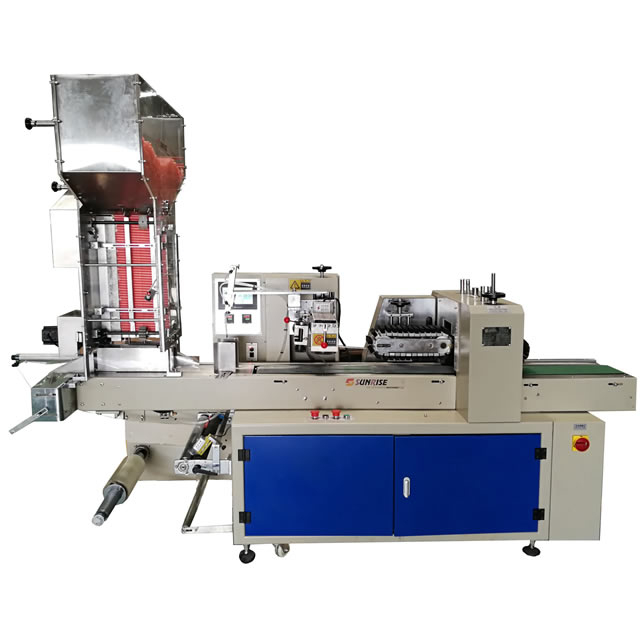
Automation in straw packaging is built around continuous motion systems designed to minimize interruption while maintaining precise control over material handling. Each stage is synchronized to ensure that feeding, wrapping, sealing, and cutting operate as a unified production sequence.
Straws are first loaded into a hopper where they are automatically separated and aligned for processing. Feeding mechanisms regulate spacing and orientation to prevent overlapping or misalignment during transfer. Servo-driven rollers or mechanical guides maintain steady movement into the next stage of the system. This step is critical because irregular feeding can disrupt downstream wrapping and sealing accuracy. In high-speed production environments, consistent alignment ensures that every straw enters the wrapping section under controlled conditions, reducing the likelihood of jams or uneven output across continuous operation cycles.
Once aligned, each straw moves through a wrapping system where paper or film is applied. The material is sealed using heat or pressure before being cut into uniform lengths. These processes occur in a continuous motion cycle, allowing the system to maintain high output efficiency without manual intervention. Synchronization between feeding rollers, sealing units, and cutting blades ensures accurate packaging dimensions and clean edges. Temperature control is particularly important when processing PLA materials to prevent deformation. The integration of these steps into a single automated sequence improves production stability while maintaining consistent packaging quality across long operational runs.
The entire system is managed through a PLC touchscreen interface that allows operators to adjust key parameters such as straw length, packaging quantity, and operating speed. These adjustments can be made without mechanical modifications, enabling fast transitions between product specifications. Production settings can also be stored and reused for repeat orders, reducing setup time and improving operational consistency. This level of control supports multi-SKU production environments where flexibility and efficiency must coexist.
Modern straw packaging machines are defined by precision engineering and adaptability rather than basic automation alone. Their performance depends on synchronized motion systems, material flexibility, and integrated control technologies that ensure stable operation under high-speed conditions.
Servo-driven systems coordinate feeding, sealing, and cutting modules to maintain precise timing across all mechanical movements. This synchronization reduces vibration and minimizes errors such as misalignment or incomplete sealing. In PLA applications, where material rigidity increases sensitivity to mechanical stress, stable motion control becomes essential for maintaining product integrity. Servo systems also distribute load evenly across moving components, reducing wear and improving long-term equipment reliability. As production speed increases, synchronization ensures that output quality remains consistent without compromising operational stability.
Modern systems are designed to accommodate PLA, paper, PP, and U-shaped straws without requiring major structural changes. Adjustable settings for temperature, pressure, and feeding speed allow quick adaptation to different materials. This flexibility supports manufacturers working across multiple product categories and responding to shifting sustainability requirements. A single system can therefore serve diverse applications, improving production efficiency while reducing the need for specialized equipment lines.
Inline printing systems enable real-time application of logos, batch codes, or regulatory markings directly onto packaging materials. Optical tracking systems ensure alignment accuracy during cutting and sealing, maintaining consistent visual output across production batches. This improves branding consistency and enhances traceability in regulated supply chains, particularly in retail and export markets where labeling accuracy is essential.
PLA straw packaging systems are deployed across multiple industries where hygiene, scalability, and packaging consistency are essential. Each application reflects different operational priorities, ranging from consumer presentation to industrial logistics efficiency.
Restaurants and fast-food operators rely on individually wrapped straws to meet hygiene standards and ensure customer convenience. Automated systems provide consistent sealing quality while reducing manual labor requirements in high-volume environments.
U-shaped straw packaging systems are widely used in beverage carton production lines, where straws are automatically prepared and attached to packaging units. This ensures precise alignment and seamless integration with high-speed filling operations.
Eco-focused brands depend on uniform and visually consistent packaging to enhance shelf appeal and reinforce sustainability positioning. Reliable wrapping quality directly influences product presentation and consumer perception.
Export suppliers rely on standardized packaging formats and high throughput systems to meet international compliance requirements. Consistency across batches supports efficient logistics and cross-border distribution.
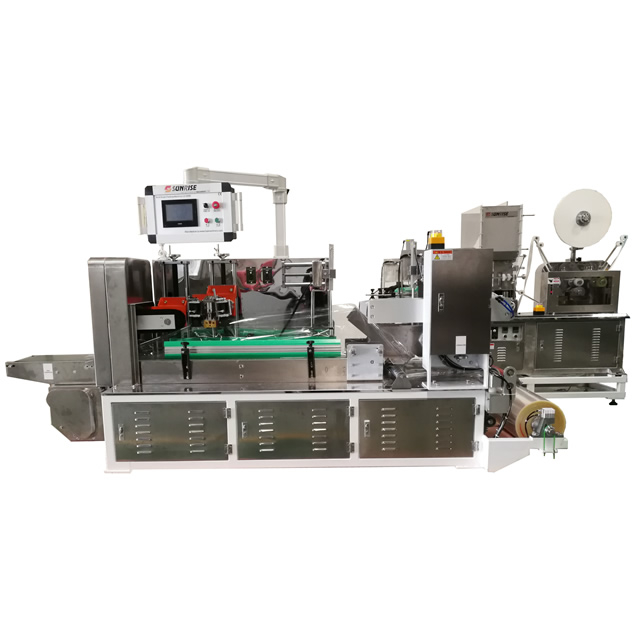
Selecting an appropriate system requires balancing production scale, material compatibility, and long-term operational efficiency. Each factor plays a role in determining overall productivity and cost-effectiveness.
Smaller production setups generally use individual wrapping systems, while larger facilities combine wrapping and group packing lines. Choosing the correct configuration ensures that production capacity aligns with actual demand. Misalignment can lead to inefficiencies or underutilization of equipment.
Machines must support multiple straw types and packaging formats without requiring extensive recalibration. This flexibility allows manufacturers to adapt quickly to changing product requirements and market demand without significant downtime.
Ease of maintenance, availability of spare parts, and access to technical support directly influence operational continuity. Modular design and simplified cleaning processes reduce downtime and improve long-term production stability.
A PLA straw packing machine plays an important role in stabilizing modern straw packing operations, especially as manufacturers shift toward biodegradable materials and stricter hygiene standards. From individual wrapping to bulk grouping, each straw machine configuration supports different production demands while maintaining consistency, efficiency, and controlled handling across varied straw types.
Solutions provided by Hangzhou Fuyang Sunrise Machinery Co.,Ltd. focus on adapting these requirements into practical equipment setups that improve workflow stability and reduce manual handling. For manufacturers evaluating upgrades in straw packing systems, aligning machine capability with real production scale and material behavior remains the key to long-term operational efficiency.
A: It is used to automatically wrap, count, and bundle biodegradable PLA straws into sealed packaging, improving efficiency, hygiene, and consistency in high-speed straw packing production lines.
A: A modern straw machine can process PLA, paper, and plastic straws by adjusting feeding speed, sealing temperature, and pressure to match different material behaviors during packaging.
A: Straw wrapping machines focus on individual straw sealing, while straw packing systems may include wrapping, counting, and grouping functions for bulk or retail-ready packaging formats.
A: Automation reduces manual handling, improves counting accuracy, and maintains stable output in high-speed production environments, especially for biodegradable straw manufacturing.
A: Yes, PLA straws can be packed using paper or BOPP film, but sealing performance depends on correct temperature and pressure settings within the straw packing machine system.


