
Views: 0 Author: Site Editor Publish Time: 2026-06-19 Origin: Site


Confusion often starts when “straw wrapping machine” and “straw packing machine” are used interchangeably in equipment lists, even though they refer to different stages of production. One focuses on sealing each straw individually, while the other may extend into counting, grouping, and preparing finished bundles for shipment.
In real manufacturing lines, straw packaging moves through layered automation rather than a single process. Understanding where each machine fits helps avoid mismatches in output requirements, especially when balancing hygiene, speed, and packaging format in high-volume straw production.
The terminology issue between “wrapping” and “packing” is not technical at first glance, but commercial. Different manufacturers often label similar equipment differently depending on marketing positioning and target buyers.
“Wrapping” usually describes single-item packaging, while “packing” is used for broader systems that may include counting, grouping, or secondary packaging. In practice, many suppliers combine both functions into integrated lines, which makes the distinction even less visible in catalogs.
Procurement confusion also comes from how buyers search. Most users do not search for machine categories; they search for outcomes such as sealed straws or bulk packaged straws. As a result, overlapping keywords shape how products are named and presented.
From a practical standpoint, the naming is less important than three factors:
● Final output format (single pack or grouped packs)
● Level of automation involved in the process
● Whether the machine can integrate into a full production line
Once these are understood, the terminology difference becomes secondary rather than decisive.
A straw wrapping machine is designed for one clear task: sealing a single straw into a protective package. This stage is typically considered primary packaging, where hygiene and appearance are the main priorities.
The working process is relatively linear. Straws are fed into the machine, aligned, wrapped with film or paper, sealed using heat or pressure, and then cut into individual packs. Each cycle repeats continuously, allowing stable high-speed output.
Typical configurations include:
● Automatic feeding systems for continuous straw input
● Film or paper roll unwinding units
● Heat sealing and cutting modules
● Output collection or conveyor discharge
These machines are widely used in environments where individual hygiene packaging is mandatory. Fast food chains, beverage supply chains, and retail straw packaging operations rely heavily on this format because each straw must be independently protected.
In terms of performance characteristics, wrapping machines prioritize consistency over complexity. They are optimized for:
● Stable high-speed output
● Accurate sealing quality
● Minimal variation between packs
● Compact layout compared to full packaging lines
The limitation is clear as well: they do not handle grouping or secondary packaging, meaning they usually operate as part of a larger system rather than a standalone factory solution.
A straw packing machine represents a broader category rather than a single function device. Instead of focusing only on individual wrapping, it covers multiple packaging stages depending on configuration.
In industrial use, packing systems may include single packing modules, multi-straw bagging machines, and automatic grouping systems that prepare products for shipping or retail distribution. This makes “packing” closer to a system-level definition rather than a single mechanical process.
A typical packing workflow may involve:
● Counting straws into fixed quantities
● Grouping them into sets
● Forming bags or cartons
● Sealing and discharging finished units
This structure is especially important in export-oriented or wholesale straw manufacturing, where products must be delivered in bulk formats rather than individual units.
Industries relying on packing systems usually operate at higher production scales. These include:
● Large straw manufacturing factories
● Export packaging facilities
● Retail multipack production lines
Another important aspect is integration. Packing machines are often connected with upstream straw production and downstream logistics systems. This allows a continuous flow from raw straw production to final packaged shipment without manual handling interruptions.
In this sense, packing machines function as the “coordination layer” of the entire packaging system, while wrapping machines focus only on the individual unit level.
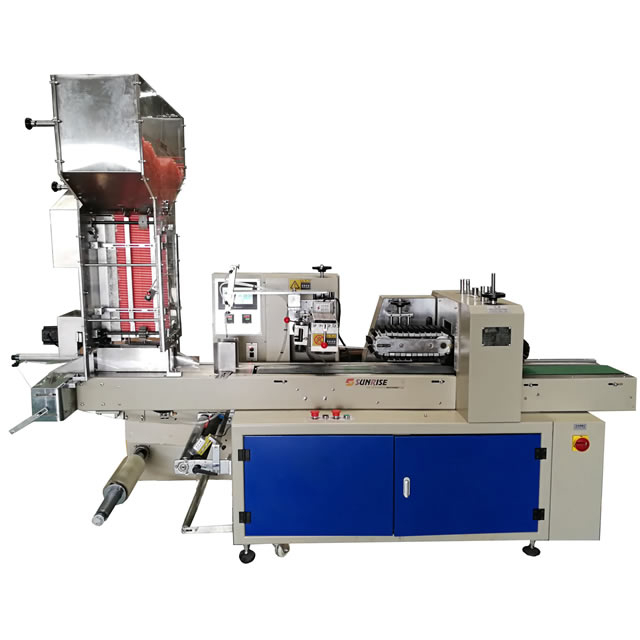
The difference between wrapping and packing becomes clearer when viewed as a workflow rather than isolated machines.
Wrapping belongs to the unit-level protection stage. Its purpose is to isolate and seal a single straw for hygiene and branding purposes. Packing, on the other hand, operates at the aggregation level, where multiple units are organized into structured shipping or retail formats.
From an engineering perspective, the focus also shifts between the two:
Wrapping systems emphasize:
● Precision sealing stability
● Film handling consistency
● Clean, controlled packaging environments
Packing systems emphasize:
● Counting accuracy
● Grouping logic and flexibility
● Efficient downstream transfer to cartons or bags
In actual production environments, wrapping is often embedded inside packing systems rather than operating independently. This is why many modern machines blur the line between the two categories.
Output differences remain the simplest way to distinguish them:
● Wrapping output: individually sealed straws
● Packing output: grouped bags, cartons, or multi-unit packages
Understanding this separation helps avoid misinterpretation when evaluating equipment specifications.
Attribute | Straw Wrapping Machine | Straw Packing Machine |
Packaging stage | Primary packaging (individual sealing) | Secondary packaging (grouping and distribution) |
Core function | Wraps single straw in film or paper | Counts, groups, and organizes multiple straws |
Output format | Single sealed straw pack | Multi-straw bags or cartons |
Automation focus | Stable single-process automation | Integrated multi-process system |
Production role | Hygiene and presentation control | Logistics and bulk packaging efficiency |
Typical application | Food service, retail single-use straws | Wholesale, export, and retail multipacks |
Selecting between wrapping and packing machines should never start from terminology. The correct starting point is always the required output format.
If the product requirement is hygienic single straw packaging for direct consumer use, a wrapping-focused system is usually sufficient. If the requirement involves distribution, retail multipacks, or export logistics, a full packing system becomes more appropriate.
Production scale also plays a decisive role. Smaller operations may rely on standalone wrapping machines due to lower complexity and investment cost. Larger factories, however, typically adopt integrated lines that combine multiple packaging stages into one automated flow.
Material behavior adds another layer of consideration. Paper, plastic, and biodegradable straws each behave differently under heat sealing and feeding conditions. Some systems are specifically tuned for sensitive materials like PLA or paper, where temperature and alignment control are critical.
Finally, integration capability often determines long-term efficiency. Wrapping machines usually sit at the early stage of production, while packing systems connect to downstream logistics and shipping preparation.
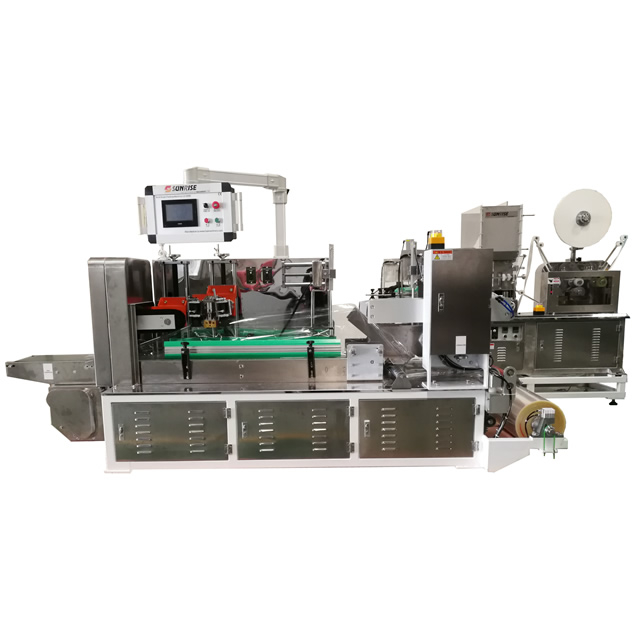
As automation advances, the boundary between wrapping and packing becomes increasingly fluid. Modern straw production lines often combine multiple stages into a single continuous system, reducing the need for separate machines.
In many facilities, one integrated line can handle:
● Individual wrapping
● Automatic counting
● Bag formation
● Carton packing
All steps operate under synchronized control systems that adjust speed and output dynamically.
Modular design also contributes to this convergence. Machines can be reconfigured to switch between single straw packaging and bulk packaging formats depending on order requirements. This flexibility reduces downtime and improves responsiveness to different SKUs.
For buyers, this shift means naming conventions matter less than system capability. The focus has moved toward throughput stability, automation depth, and adaptability across different packaging formats rather than whether a machine is labeled “wrapping” or “packing.”
The distinction between straw wrapping machines and straw packing machines becomes clearer when viewed through their functional roles rather than their names. One focuses on sealing individual straws for hygienic and presentation purposes, while the other extends into counting, grouping, and preparing products for storage or distribution.
Understanding this difference helps reduce costly mismatches in equipment selection, especially in high-output straw production environments where efficiency and consistency matter more than terminology. In practice, equipment from manufacturers such as Hangzhou Fuyang Sunrise Machinery Co.,Ltd. is designed to support both individual wrapping and integrated packing needs, helping producers build more stable and efficient straw packaging workflows.
A: A straw wrapping machine focuses on sealing individual straws in film or paper, while a straw packing machine may include counting, grouping, and final bagging or boxing for distribution.
A: They are not identical. A straw packing machine can include wrapping functions, but it also covers broader packaging stages such as grouping, multi-pack formation, and automated output handling.
A: A straw machine can process plastic, paper, PLA, or PHA straws. Depending on configuration, it supports single straw wrapping or bulk packing for retail and export formats.
A: Choose a straw wrapping machine when the goal is hygienic individual packaging. It is suitable for food service supply chains and applications requiring single-use sealed straws.
A: Straw packing systems are widely used in beverage manufacturing, fast food supply chains, and export packaging facilities where high-volume grouped or retail-ready straw packaging is required.
A: Not always. Some systems focus only on individual wrapping, while advanced production lines integrate both wrapping and packing into one continuous automated process.


