
Views: 0 Author: Site Editor Publish Time: 2026-05-27 Origin: Site


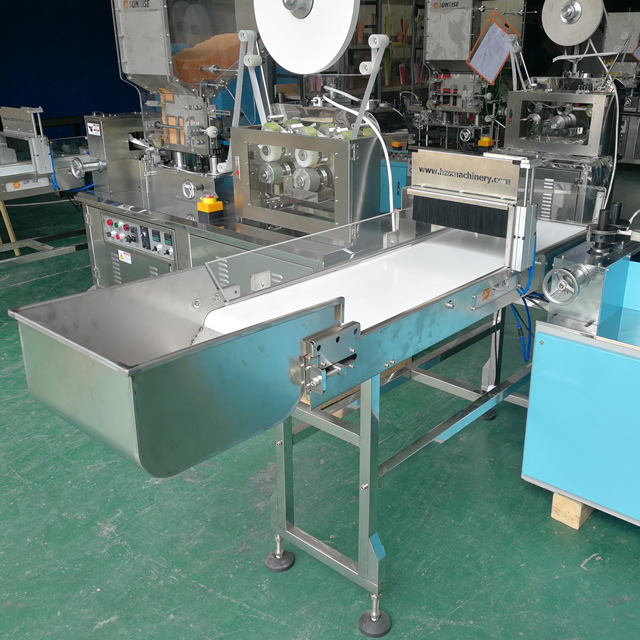
Transitioning from manual packaging to modern automation represents more than a simple operational upgrade. It serves as a critical compliance strategy and a proven method for protecting tight margins. Fast-paced production environments cannot rely on outdated, hands-on wrapping. For procurement managers and production engineers, mastering the core mechanics of a straw packing machine extends far beyond basic assembly. You must evaluate throughput reliability, equipment durability, and material adaptability as markets shift from plastic to paper or PLA. Relying on baseline specifications often leads to bottlenecks. It can also compromise factory hygiene standards.
A properly specified packing unit perfectly aligns your production speed with final application demands. It minimizes material waste and operator intervention while ensuring food-grade sanitary standards. In this comprehensive guide, we break down machine anatomy, commercial benefits, downstream integrations, and vendor evaluation criteria.
Throughput vs. Customization: Standard machines yield 600–800 pieces per minute (ppm), but integrating inline printing reduces speed to roughly 300 ppm to maintain registration accuracy.
Material Flexibility is Critical: Modern equipment must seamlessly transition between BOPP film, PE-coated paper, and PVA films to adapt to evolving environmental regulations.
Downstream Integration: Single and multi-straw wrappers increasingly need to interface with downstream equipment, such as a straw paper box packing machine, for retail-ready automation.
Tech-Driven Quality Control: Advanced models leverage Programmable Logic Controllers (PLCs), servo motors, and vision systems to eliminate defects in real-time.
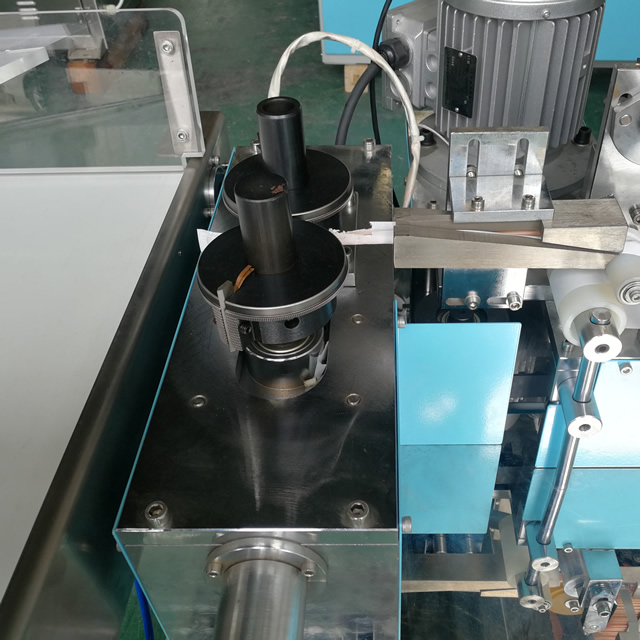
Buyers often simplify this equipment as merely "wrapping" hardware. In reality, modern packaging requires complex synchronization. A standard unit must balance material feeding, precise tension control, and thermal sealing. Overlooking any single component leads to jammed lines and wasted materials.
Understanding the internal architecture helps you spot engineering quality. High-end units replace basic mechanical linkages with smart, electronic controls. Below are the core engineering components powering these systems.
Feeding and Sorting Hopper: This component requires continuous material flow. Engineers design these hoppers to eliminate jam-inducing static. They also reduce surface friction. Smooth sorting ensures straws enter the packaging channel individually.
Front-End Mechanical Tension Device: This mechanism is crucial for regulating film or paper unwinding. It prevents sudden material snaps. It also eliminates slack. Proper tension keeps the wrapper perfectly flat before it reaches the cutting station.
Sealing and Cutting Station: This zone utilizes precision heating elements. Most units apply either three-side or four-side seals. Rotary or guillotine blades then separate the individual wrappers. Precise temperature control here prevents melted film or burnt paper.
Electronic Control Foundation: The industry is moving away from purely mechanical drives. Today, Servo Motor Technology and PLCs run the show. They allow rapid adjustments for length, cut timing, and operational speed. This software-driven approach reduces mechanical wear.
Investing in automated wrapping directly impacts your bottom line. It transforms unpredictable packaging processes into measurable, scalable workflows. You gain massive improvements in labor usage, compliance, and product integrity.
Automating counting and wrapping drastically reduces headcount on the packaging line. Human operators naturally introduce errors during batch counts. Machines eliminate these discrepancies. Your factory outputs exact quantities every single shift. This consistency protects your profit margins and ensures customers receive exactly what they order.
Food safety compliance is another massive driver. Enclosed, automated wrapping minimizes human contact. This meets stringent FDA or local sanitary standards. Fast-food, dairy, and retail supply chains demand zero-contamination processing. A closed-loop machine environment provides this guarantee.
Furthermore, advanced sealing techniques safeguard shelf-life and product integrity. Standard wrappers use a three-side seal. However, newer I-shaped four-side sealing creates superior moisture and dust barriers. This protection is absolutely essential for paper straws. They degrade quickly when exposed to ambient factory humidity.
Brand presentation also benefits from high-quality machinery. Consistent, tight wrapping elevates consumer perception. When you align inline printing properly, your logos look sharp. It also ensures barcode and QR code scannability for retail checkout.
Feature | Three-Side Sealing | Four-Side (I-Shaped) Sealing |
|---|---|---|
Barrier Protection | Standard moisture/dust resistance. | Superior protection against humidity. |
Best Suited For | Rigid plastic straws. | Fragile paper and PLA straws. |
Aesthetic Quality | Basic utility appearance. | Premium, uniform, tight wrap. |
Machine Complexity | Lower maintenance, simpler setup. | Requires precise thermal calibration. |
You should never buy industrial equipment based on baseline specifications alone. A high-speed machine holds no value if it does not fit your end-user's industry. You must map the machine's output format to the exact downstream application.
Different consumer sectors demand unique packaging formats. A juice box manufacturer needs a completely different wrapping style than a fast-food chain. Here is a breakdown of how specific machine types align with distinct industries.
Single Straw Wrappers: These units are best for Quick Service Restaurants (QSRs) and local cafes. They often require advanced cursor positioning. This technology ensures accurate logo alignment on every individual wrapper. It reinforces brand identity right at the point of consumption.
U-Shaped (Tetrapak) Wrappers: Engineers design these specifically for the dairy and juice-box industry. These machines require smart-tracking modules. They also integrate glue-applicators. This allows them to interface directly with high-speed liquid filling lines. The wrapper securely attaches to the side of the beverage carton.
Multi-Straw & Linkage Systems: This setup bundles multiple items into a single polybag. Supermarkets and big-box retailers require this format. Operators often engineer these systems to feed directly into a straw paper box packing machine for end-to-end cartoning. This creates a fully autonomous, retail-ready production floor.
Evaluating packaging equipment involves acknowledging operational trade-offs. You cannot maximize speed, complex printing, and extreme material flexibility simultaneously. Adding premium features inevitably alters other performance metrics.
Speed versus complexity represents the most common trade-off. Be transparent about production expectations. Adding modules fundamentally alters maximum operational speeds. For example, integrating 2-color inline printing requires precise ink registration. Integrating laser perforations demands split-second timing. These additions often drop operational speeds from 800 ppm down to roughly 300 ppm. You must decide if brand presentation outweighs raw throughput.
Material handling variances also dictate your evaluation process. Rigid plastic requires different hopper dynamics than fragile, high-friction paper. Brittle PLA straws introduce another layer of complexity. You must ensure the machine handles your specific diameter. Typical ranges span from 4mm standard sizes to 12mm boba sizes. The feeding channels must guide these products without crushing them.
Finally, assess vision systems and quality control mechanisms. Check whether the machine features inline camera systems. These cameras automatically detect misaligned seals. They also identify empty wrappers. The PLC then triggers a rejection mechanism. This prevents defective batches from reaching clients. Manual inspection simply cannot match the speed and accuracy of a modern vision system.
Configuration Type | Estimated Speed | Primary Benefit | Primary Drawback |
|---|---|---|---|
Basic Wrapper (No Print) | 600 - 800 ppm | Maximum volume output. | No brand messaging. |
Inline Printing (1-2 Colors) | 300 - 400 ppm | Strong brand visibility. | Slower speeds, higher maintenance. |
Vision System Integration | 400 - 600 ppm | Zero-defect batch guarantee. | Requires complex PLC calibration. |
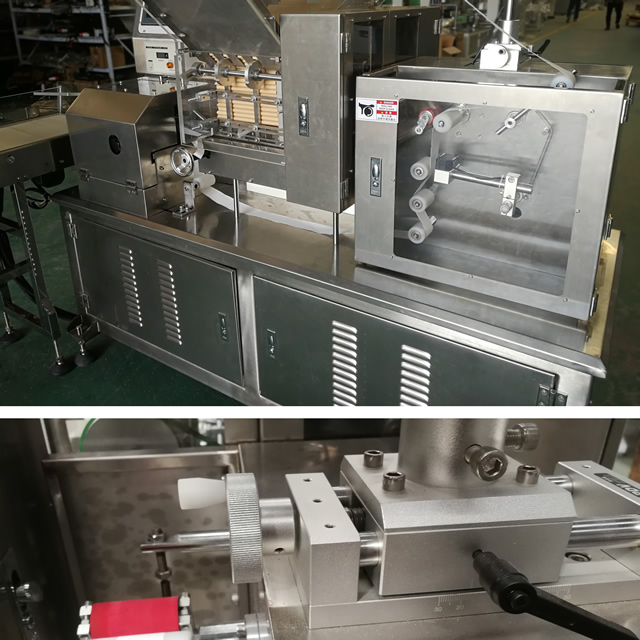
Procuring the machine is merely the first step. Physical implementation introduces distinct engineering challenges. Installation requires precise alignment with your existing extrusion or drying lines. Footprint constraints must be verified early. Many factories require compact 1200mm × 1800mm models to fit tight floor plans. Misjudging spatial requirements leads to expensive facility modifications.
Changeover downtime acts as a critical hidden cost. How fast can operators switch production runs? Transitioning from a 6mm paper straw to a 12mm boba straw requires hardware adjustments. Look for tool-less changeover features. Modular cutting heads and adjustable forming collars drastically reduce this downtime. If operators need wrenches to change guides, you lose hours of valuable production.
Lifecycle maintenance now extends beyond routine physical upkeep. Historically, mechanics simply applied lubrication and sharpened blades. Modern maintenance requires software literacy. Technicians must process software updates for the PLC. They must also maintain tensioner calibration. Skipping these steps causes film drift and misaligned cuts.
Best Practice: Standardize your material inputs before finalizing machine settings. Test your exact paper grade or BOPP film on the manufacturer's floor. This reveals hidden static or friction issues early.
Common Mistake: Ignoring operator software training. Factories often train staff on clearing jams but fail to teach PLC menu navigation. This forces operators to call external technicians for minor sensor recalibrations, causing unnecessary downtime.
Selecting a manufacturer requires intense scrutiny of their operational support. Initial capital expenditure is only part of the equation. You must evaluate the long-term availability of wear parts. Blades dull, heating elements degrade, and tension springs lose elasticity. If your vendor cannot ship replacement parts domestically within 48 hours, your production line remains paralyzed.
Vendor validation should involve physical proof, not just glossy brochures. Demand live video demonstrations. Instruct the manufacturer to run your specific materials during this demo. This is especially vital if you use proprietary biodegradable films. Standard PE-coated paper behaves differently than experimental PLA blends. A live test proves their tensioners and heating elements can handle your exact inventory.
Finally, scrutinize their After-Sales Service Level Agreements (SLAs). Modern machinery relies heavily on digital controls. Verify the manufacturer's capability for remote PLC troubleshooting. A skilled technician should securely log into your machine's interface from across the globe. They can adjust servo timings or clear software faults instantly. Combine this digital support with guaranteed response times for physical parts dispatch. Strong SLAs keep your production running smoothly year after year.
A highly functioning packing machine acts as a critical juncture in your manufacturing line. It dictates product safety, ensures brand compliance, and secures overall line profitability. Settling for subpar equipment jeopardizes your contracts with major retail and restaurant clients.
We recommend basing your procurement decision on a comprehensive performance matrix. Weigh your expected throughput against material versatility. Factor in the required level of downstream automation. Balancing these elements ensures you select a unit tailored to your actual factory floor realities.
Evaluate speed constraints when adding inline printing modules.
Ensure your equipment features tool-less changeovers to minimize daily downtime.
Prioritize vendors offering remote PLC diagnostics and rapid wear-part dispatch.
Match your sealing technology to the fragility of your packaging materials.
Take action today by requesting a material testing run with a shortlisted manufacturer. Ask them to process your most difficult PLA or paper materials. You can also calculate your exact return on investment based on your current manual packaging labor costs. Upgrading your automation strategy pays immediate dividends in speed, safety, and scale.
A: Most modern machines handle BOPP film, PE-coated paper, PLA, and PVA. However, tension settings and sealing temperatures must be adjusted per material. Paper requires different thermal controls than plastic to avoid burning.
A: Yes. To ensure accurate optical registration and ink application, speeds typically reduce from a maximum of roughly 800 ppm to approximately 300 ppm. This ensures the brand logos remain perfectly aligned.
A: Yes, but within limits. Most units accommodate sizes ranging from 4mm to 12mm. Changeovers require adjusting the feeding channels, resizing forming collars, and occasionally swapping out the cutting dies.


