
Views: 0 Author: Site Editor Publish Time: 2026-06-15 Origin: Site


Production lines for beverage straws have shifted toward fully automated workflows, where speed, hygiene, and consistency matter as much as output volume. At the center of this transition sits the automatic straw packing machine, which handles everything from alignment and wrapping to sealing and cutting with minimal human involvement.
Understanding how a modern straw packing / straw machine system operates helps manufacturers avoid costly setup mistakes and choose configurations that match real production needs rather than theoretical specifications.
In a complete straw manufacturing line, packaging sits at the final stage where product consistency and hygiene are locked in before storage or shipment. A single straw packing machine is installed after cutting, sorting, and inspection, forming the last automation barrier between raw output and finished goods. At this point, straws are already dimensionally stable and ready for individual wrapping, which makes this stage highly sensitive to timing and synchronization.
Upstream systems such as extrusion and cutting machines feed directly into the packing section through conveyors or buffer storage units. This creates a continuous flow where production speed must remain balanced across all stages. When the packing unit operates slower than upstream processes, accumulation occurs; when it runs faster, idle gaps reduce efficiency. Proper integration ensures a stable rhythm across the entire line.
The conversion from bulk straws to sealed single units happens entirely within the packing module. Feeding systems separate and align each straw before transferring it into the wrapping zone. From there, sealing and cutting are completed in a synchronized cycle, ensuring that every piece exits in identical condition. This transformation is critical for industries where hygiene compliance and packaging uniformity define product acceptance.
In modern straw machine systems, continuous operation is a defining principle. Servo-driven coordination keeps feeding, wrapping, and sealing synchronized even during extended shifts. Rather than relying on manual adjustment, the system automatically stabilizes minor variations in speed or material tension. This reduces downtime and keeps output consistent across long production cycles.
The role of this stage extends beyond packaging alone. It also standardizes branding, supports export requirements, and prepares products for secondary packaging systems such as bagging or carton loading. As a result, the single straw packing machine becomes a structural stabilizer within the production ecosystem rather than just an isolated unit.
The internal structure of a single straw packing machine is built around a continuous motion system that coordinates feeding, wrapping, sealing, and cutting without interruption. Each module is mechanically independent but electronically synchronized, allowing the system to maintain stable output even under variable load conditions.
Feeding accuracy forms the foundation of the entire process. Straws are separated using guided rails, vibration-assisted channels, or pneumatic alignment systems depending on model configuration. This ensures that each straw enters the wrapping section in a consistent orientation, preventing overlap or misalignment that could affect sealing quality downstream.
Once positioned, the wrapping unit applies film or paper material around the straw. Tension control is critical here, as uneven force can lead to wrinkles or loose sealing. The system maintains a stable material feed using controlled rollers that adjust dynamically to production speed. This allows consistent wrapping quality across different straw sizes and materials.
Sealing and cutting occur in a tightly synchronized cycle. Heat sealing rollers or pressure-based sealing bars close the packaging while rotary cutters define final length. Because these actions occur in continuous motion, the machine avoids stop-start inefficiencies commonly seen in semi-automatic systems. This structure is one of the key reasons high-speed straw machine systems can maintain stable output over long runs.
Servo motors and PLC control systems form the core intelligence layer. These components regulate timing, pressure, and alignment with high precision. Modern configurations such as LG-58S or LG-58YS use programmable logic to adjust settings automatically when switching straw specifications. This reduces dependency on manual calibration and improves operational flexibility.
Additional subsystems, such as color tracking or printing alignment modules, ensure that branding remains consistent across each wrapped unit. This is especially important for retail or hospitality applications where visual uniformity directly affects product presentation. Together, these mechanical and control systems create a fully integrated packaging environment designed for both speed and stability.
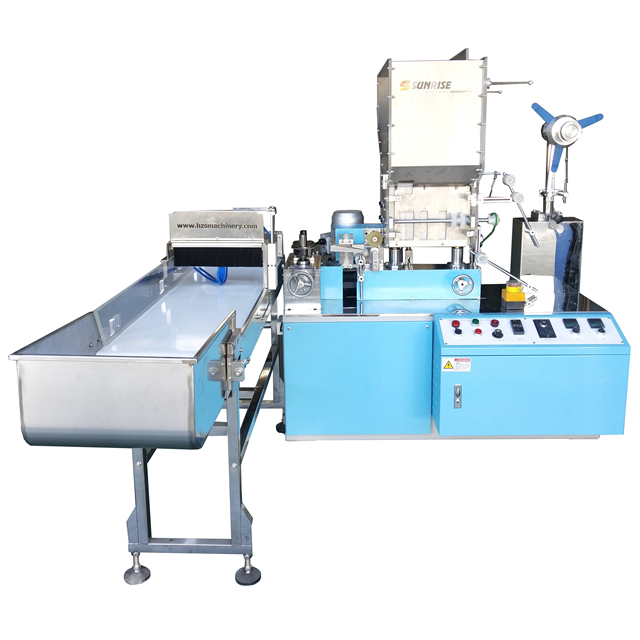
Material behavior directly influences how a straw packing machine performs during production. Each straw type introduces different mechanical and thermal requirements that must be addressed through system configuration and control logic.
PP straws remain the most stable material during packaging. Their rigidity allows smooth feeding and high-speed operation with minimal deformation risk. This makes them suitable for continuous high-output production environments where efficiency is prioritized over material sensitivity.
Paper straws behave differently due to their fibrous structure. They are more sensitive to pressure and surface friction, requiring gentler feeding systems and controlled tension during wrapping. Excessive force can damage surface integrity or cause bending, which affects sealing accuracy. Machines handling paper materials often use optimized roller systems to reduce stress during transfer.
PLA straws introduce additional environmental sensitivity. Their biodegradable structure reacts more strongly to heat and humidity, especially during sealing. Temperature control becomes critical to avoid deformation while still maintaining secure packaging integrity. Stable environmental conditions around the sealing zone help maintain consistent output quality.
Modern equipment is designed to support all three materials within a unified platform. This flexibility reduces the need for dedicated production lines and allows manufacturers to switch between product categories based on demand. In practice, this adaptability becomes a cost-control mechanism as well as a production advantage.
Instead of treating materials as isolated use cases, integrated straw machine systems manage them through adjustable parameters such as tension, temperature, and speed. This allows a single platform to handle multiple production requirements without structural modification.
Evaluating a single straw packing machine requires focusing on operational stability rather than peak theoretical output. In real production environments, consistency over time is more valuable than short-term speed performance.
Output stability determines whether a production line can maintain uniform performance across long shifts. Variations in feeding or sealing often lead to batch inconsistency, which increases rejection rates during quality inspection. Stable systems minimize these fluctuations through coordinated motion control.
Changeover flexibility plays another important role. When switching between different straw sizes or product specifications, efficient systems allow adjustment through digital controls rather than mechanical replacement. This significantly reduces downtime and improves production agility.
Packaging precision is equally important. Sensor-based alignment systems ensure that each straw is positioned correctly before sealing. Even small deviations can lead to defective sealing or uneven cuts, which directly impacts packaging quality. High-precision systems reduce waste and improve overall yield rates.
Energy efficiency and maintenance cycles also influence long-term cost performance. Machines designed with optimized servo control reduce unnecessary energy consumption while extending component lifespan. In industrial environments, these factors often outweigh marginal differences in maximum speed.
Ultimately, performance evaluation is not about isolated specifications but about how the straw machine system behaves under continuous, real-world operating conditions.
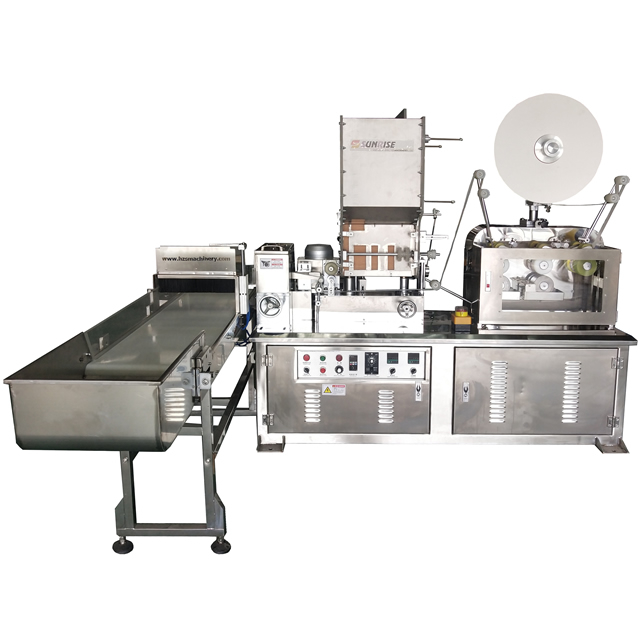
A single straw packing machine is widely used across industries where hygiene, consistency, and scalability are essential. In food service environments, individually wrapped straws support fast distribution while maintaining strict sanitation standards required by modern regulations.
Export-oriented manufacturers rely heavily on standardized packaging systems. These operations require consistent sealing quality, barcode compatibility, and multilingual labeling capability. A stable packing system ensures compliance across different regional markets without altering core production processes.
Integration with upstream and downstream automation is also common. Straw production lines often connect extrusion, cutting, and packing systems into a continuous workflow. Downstream equipment such as bagging or carton packing modules further extends automation into logistics preparation.
This interconnected structure reduces manual handling and increases overall throughput. It also improves traceability, allowing manufacturers to track production batches across the entire system. As automation becomes more widespread, the packing stage increasingly serves as the coordination hub of the entire production chain.
Selecting a single straw packing machine should begin with production scale rather than technical complexity. Smaller operations benefit from flexible configurations that allow easier adjustment and maintenance, while large-scale facilities require high-speed continuous systems with stronger automation control.
Material compatibility remains a key decision factor. A machine capable of handling PP, paper, and PLA without structural modification offers better long-term flexibility and reduces dependency on multiple production lines.
Automation level should align with operational capability. Highly automated systems reduce labor requirements but demand stricter maintenance discipline and technical understanding. Simpler configurations may be more suitable for facilities with limited technical staff or variable production schedules.
Instead of focusing on maximum performance specifications, the most effective choice is a system that balances stability, adaptability, and operational simplicity. This ensures consistent output without introducing unnecessary complexity into daily production workflows.
Understanding how an automatic straw packing machine operates helps manufacturers move beyond surface-level specifications and focus on real production behavior—stability, material handling, and integration with the wider straw packing and straw machine workflow. These factors directly influence output consistency, waste control, and long-term operating efficiency rather than just peak speed claims.
When evaluating equipment options, attention to feeding precision, sealing reliability, and material compatibility often reveals more than basic technical charts. Hangzhou Fuyang Sunrise Machinery Co.,Ltd. provides equipment designed around these practical production requirements, helping operators align machine capability with actual straw manufacturing demands across different materials and output scales.
A: An automatic straw packing machine is used to wrap, seal, and cut drinking straws into individual or grouped packages. It improves hygiene, consistency, and efficiency in modern straw packing and straw machine production lines.
A: It feeds aligned straws into a wrapping section, applies film or paper packaging, then seals and cuts each unit in a continuous cycle. This process ensures stable output with minimal manual intervention.
A: Most systems support PP plastic, paper, and PLA straws. Each material requires adjusted tension control, sealing temperature, and feeding stability to maintain consistent packaging quality.
A: Depending on configuration, a straw packing machine can typically process several hundred to over 800 straws per minute. Speed varies based on straw size, material, and automation level.
A: Key factors include production capacity, material compatibility, automation level, changeover flexibility, and maintenance requirements. These determine long-term efficiency in straw packing operations.


