
Views: 0 Author: Site Editor Publish Time: 2026-06-26 Origin: Site


A drinking straw production line is a fully coordinated manufacturing system that converts raw materials such as PP, PE, or PLA into finished straws ready for commercial use. The process depends on a tightly linked chain of equipment covering extrusion, shaping, cutting, and automated straw packing, ensuring consistent quality and stable output.
In modern manufacturing, a single straw production machine is no longer sufficient. Instead, producers build integrated systems where each machine performs a precise function in the flow of continuous production. This article breaks down the essential machines required and how they work together in a real production environment.
The extrusion section forms the foundation of the entire line, where raw plastic or biodegradable pellets are converted into continuous straw tubing. This stage is widely regarded as the most critical part of any straw production machine system because it defines dimensional accuracy and output stability.
At the center of this process is the main extruder, which melts materials like PP or PLA under controlled heat and pressure before pushing them through a precision die head. Modern extrusion systems often support multi-color or multi-layer production depending on screw configuration and die design. To ensure consistent material feeding, an automatic loader and drying unit is typically installed, especially important for PLA, which is sensitive to moisture.
Once melted, the material enters a forming channel where it is shaped into continuous tubes. A cooling water tank then rapidly stabilizes the structure, preventing deformation and ensuring smooth surface finish. After cooling, a haul-off unit pulls the straw at a controlled speed, balancing extrusion output with diameter precision.
The stability of this stage determines the performance of the entire production line. Even small fluctuations in temperature or traction speed can lead to uneven wall thickness or inconsistent diameter, which later affects cutting and packaging. In many industrial setups, extrusion lines can reach high output levels depending on screw size and configuration.
Key system functions include:
● Maintaining stable melt flow
● Controlling diameter accuracy
● Synchronizing output with downstream machines
Without this foundation, later stages such as cutting and straw packing cannot achieve consistent quality, making extrusion the true “engine room” of the production line.
After extrusion, the continuous straw tube must be transformed into standardized lengths. This is handled by the cutting and calibration system, which ensures every piece meets strict dimensional requirements before entering downstream processing.
A high-speed servo-driven cutter is the core component here. It synchronizes with the extrusion speed to cut tubes into precise lengths without distortion. Depending on production needs, adjustable blade systems can accommodate different straw sizes ranging from short coffee stirrers to long beverage straws. This flexibility is essential for manufacturers serving multiple market segments.
System Component | Function in Straw Production Line | Impact on Final Quality |
Servo-driven cutter | Cuts continuous straw tubes into fixed lengths | Ensures uniform size and reduces waste |
Blade adjustment system | Adapts cutting length for different straw types | Supports product flexibility across markets |
Alignment & straightening unit | Keeps straws stable after extrusion cooling | Prevents bending and deformation |
Conveyor collection system | Transfers cut straws to next stage | Maintains continuous production flow |
Alongside cutting, a straightening or alignment system ensures that the tubes remain stable after cooling. Without this step, slight curvature or vibration during extrusion could lead to misalignment, affecting both appearance and packaging efficiency. Conveyor-based collection systems then transport the cut straws to the next stage in a controlled flow.
This stage plays a direct role in production efficiency. Inconsistent cutting increases material waste and creates difficulties in automated straw packing, especially in single-straw wrapping systems where alignment accuracy is critical. Therefore, synchronization between extruder speed and cutter timing is essential for stable output.
Overall, the cutting system acts as a precision bridge between raw extrusion and product finishing, converting continuous material into commercially usable units.
Not all straws are simple straight tubes. Many applications require specialized shapes such as flexible bends or U-shaped configurations used in boxed beverages. This is where shaping systems become important within the production line.
Flexible straw forming machines create corrugated sections that allow bending without breaking the tube structure. These are commonly used in foodservice environments where user convenience is important. The forming process is typically integrated after cutting, allowing precise positioning of bend zones.
For juice cartons and milk packaging, U-shaped forming systems are used. These machines bend pre-cut straws into compact shapes suitable for insertion into packaging boxes. Accuracy in bending angle and positioning is critical to ensure compatibility with automated filling systems.
Some advanced lines also include co-extrusion setups that allow multi-color straws or layered designs. These systems enhance branding opportunities and product differentiation, particularly in retail-focused markets.
Although this section does not define production capacity, it significantly expands product variety. Manufacturers can shift from basic straws to specialized designs without altering the core extrusion system, making it a flexible upgrade module within the overall straw production machine ecosystem.
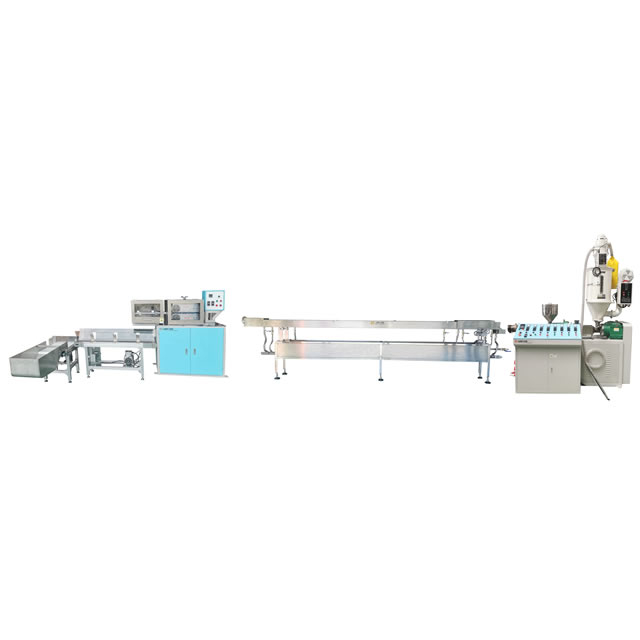
Modern straw factories rely heavily on automation to maintain stable output and reduce manual labor. This integration layer connects all machines into a continuous production flow.
A conveyor-based collecting system transports straws between cutting, shaping, and packaging stages. Buffer zones are often included to prevent bottlenecks when downstream machines operate at different speeds. This ensures that extrusion output is never interrupted.
Quality control systems are also increasingly common. Optical inspection units can detect deformation, discoloration, or size deviation. Defective products are automatically removed before reaching the packaging stage, reducing waste and improving overall efficiency.
Supporting infrastructure is equally important. Industrial chillers maintain stable water temperature in cooling systems, while air compressors power pneumatic components across the line. Centralized PLC control panels coordinate machine synchronization, allowing operators to adjust speed, temperature, and cutting parameters from a single interface.
This automation layer transforms individual machines into a unified system. Without it, even high-quality equipment would operate in isolation, reducing overall productivity and consistency in downstream straw packing operations.
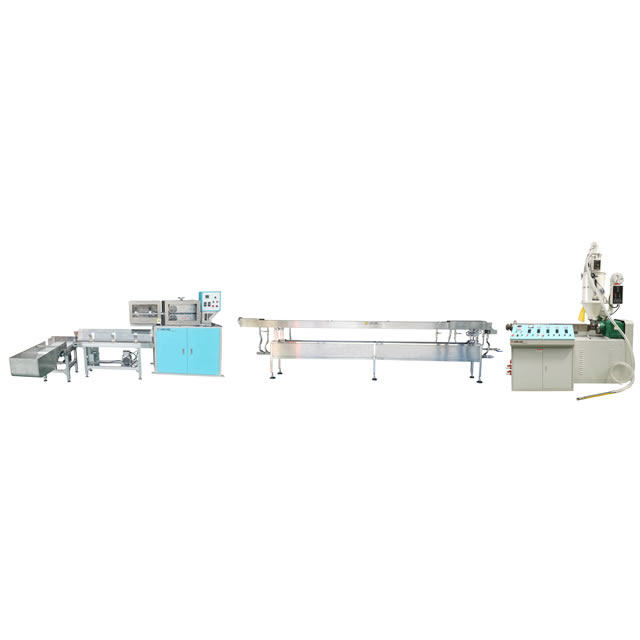
The final stage of production is straw packing, where manufactured straws are converted into retail-ready or export-ready products. This stage has the highest commercial impact because it directly influences hygiene perception, branding, and distribution efficiency.
Single-straw wrapping machines are widely used in foodservice and export markets. These systems wrap each straw individually using film or paper, ensuring hygiene and compliance with strict safety standards. For high-volume production, continuous strip packing machines are used, which wrap multiple straws in sequence and cut them into uniform packs.
For retail distribution, multi-pack bundling systems are added downstream. These machines group pre-wrapped straws into bulk packaging, handling counting, sealing, and labeling automatically. This reduces manual labor and ensures consistent packaging accuracy.
Material selection also plays a key role in this stage. BOPP film remains widely used for cost-effective packaging, while paper-based wrapping is increasingly adopted in eco-friendly product lines. The choice of material often depends on target market positioning and regulatory requirements.
Ultimately, packaging determines how the product is perceived in the market. Even if upstream production is flawless, poor packaging can reduce commercial value. For this reason, straw packing is not just a finishing step but a value-defining stage that connects manufacturing with consumer demand.
A complete drinking straw production setup relies on how well each stage connects, from extrusion and cutting to shaping and final straw packing. When these systems are properly aligned, a straw production machine line can maintain stable output, reduce material waste, and support consistent product quality across different straw types and materials.
Solutions from Hangzhou Fuyang Sunrise Machinery Co.,Ltd. focus on integrating these core processes into practical production layouts, helping manufacturers configure reliable straw machine systems that match real capacity needs and improve overall operational efficiency without unnecessary complexity.
A: A typical straw production setup includes an extruder, cooling system, cutting unit, shaping equipment, and a final straw packing machine. These components work together to convert raw materials into finished, usable drinking straws.
A: A straw production machine melts plastic or PLA pellets, pushes them through a die to form tubes, then cools and stabilizes them. This process ensures consistent diameter and wall thickness before cutting.
A: Straw packing ensures hygiene, product consistency, and efficient distribution. Automated packing systems wrap or bundle straws precisely, improving storage, transport efficiency, and retail readiness.
A: Efficiency depends on synchronization between extrusion, cutting, and packaging speed. Stable temperature control, accurate cutting, and automated handling reduce waste and improve continuous output.
A: Yes, many modern systems support adjustments for diameter, color, and material type. With modular upgrades, one straw production machine line can produce straight, flexible, or multi-color straws.
A: Automation connects each stage of production, from feeding to straw packing. It reduces manual labor, stabilizes output, and helps maintain consistent quality across large-scale production lines.


